GetTested's Allergy & Food Intolerance Test
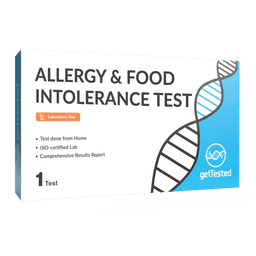
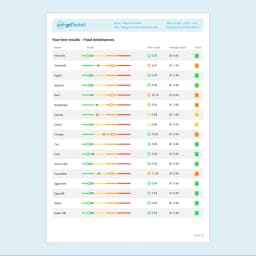
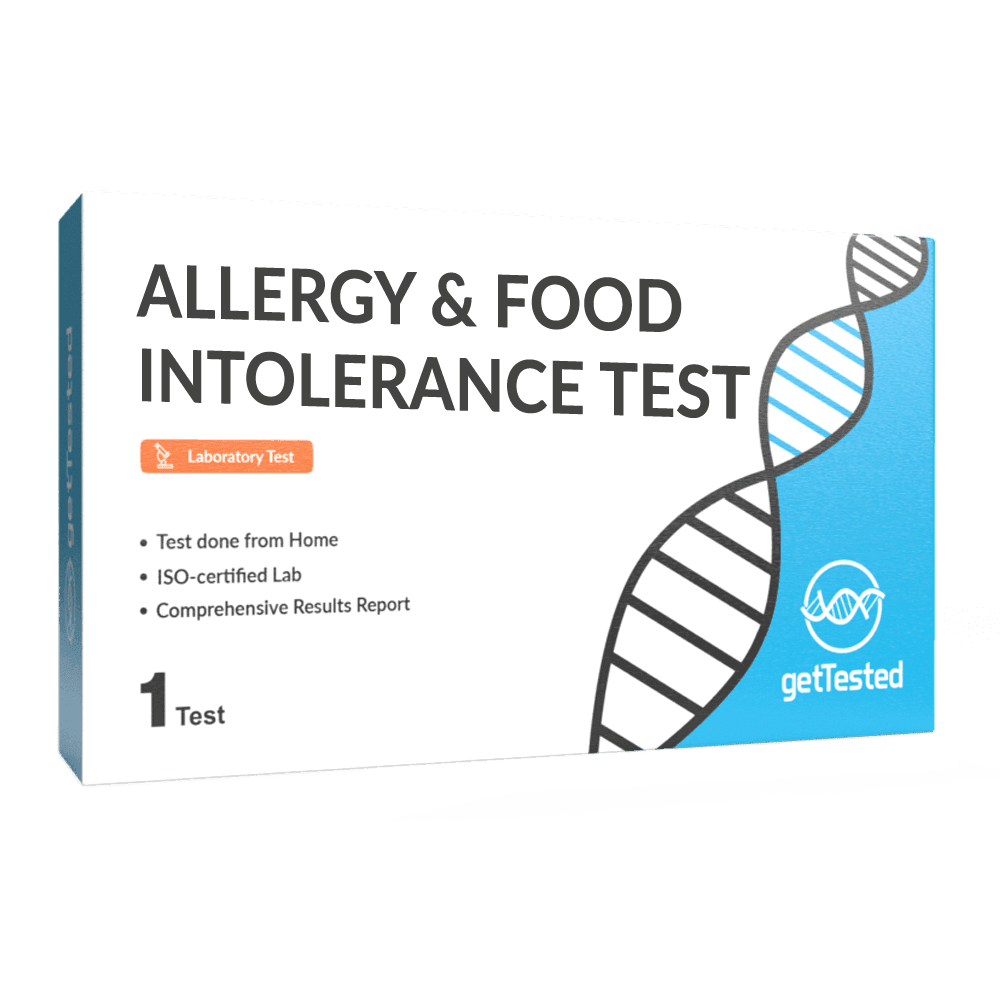
GetTested's Allergy & Food Intolerance Test is an extensive tool for identifying potential allergies and food intolerances. This dual test covers 78 substances, including various foods, pollen, mold, pets, and mites. Therefore, it provides a comprehensive view of your allergy and tolerance levels.
IgE vs. IgG: Distinguishing Allergy from Food Intolerance
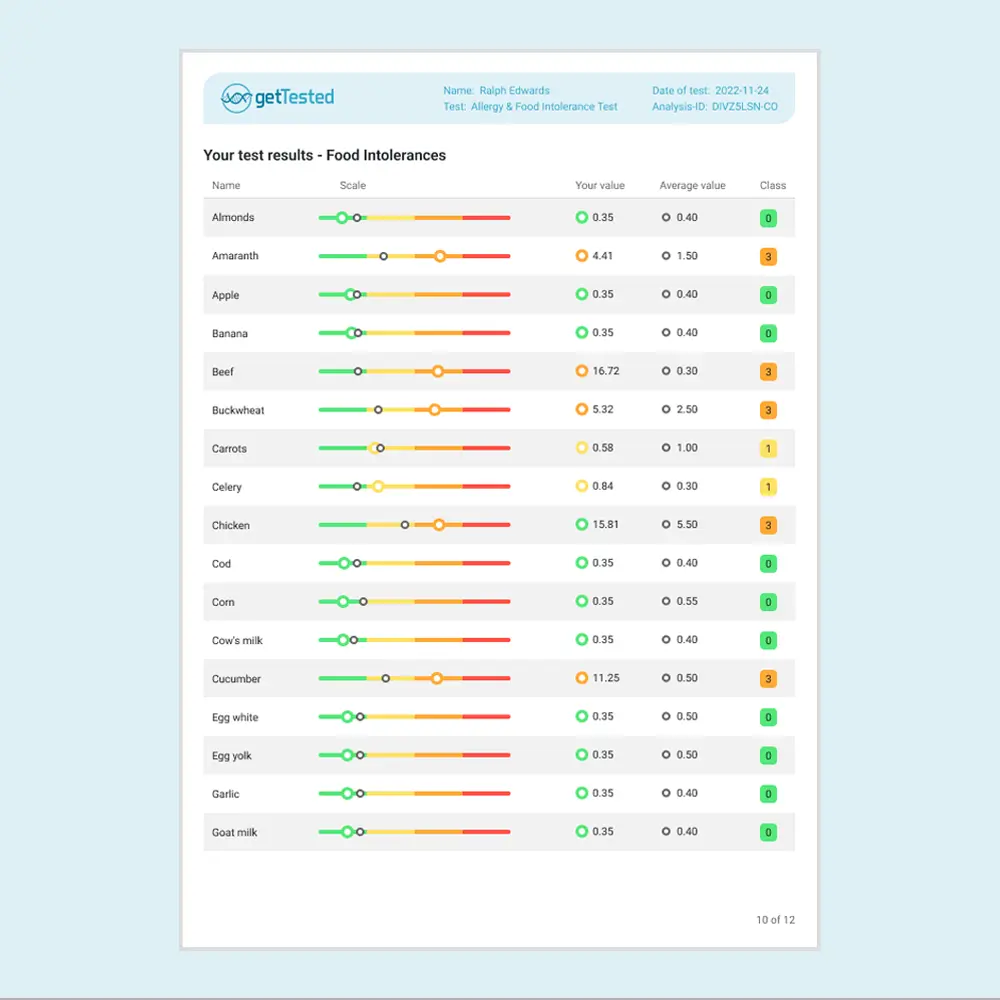
Importantly, the test differentiates between IgE antibodies (indicating allergies) and IgG4 antibodies (signifying food intolerances). Allergies involve immune system reactions, whereas food intolerances affect the gastrointestinal system. Thus, one can have an allergy to a food without being intolerant to it, or vice versa.
Allergic reactions typically appear quickly, with symptoms ranging from mild, like a runny nose, to severe and potentially life-threatening. On the other hand, food intolerances often show delayed symptoms, including fatigue, mood swings, brain fog, headaches, and gastrointestinal problems.
Histamine Intolerance and Allergy Symptoms
If symptoms like headaches or skin rashes seem familiar, consider histamine intolerance. This condition, often confused with allergic reactions, results from the body's inability to break down histamine effectively.
Allergy vs. Gluten Intolerance
It's also vital to distinguish between allergies, immediate immune responses, and gluten intolerance (celiac disease), which affects the digestive system over time. While both can share symptoms, their causes and treatments differ.
While GetTested's Allergy & Food Intolerance Test identifies allergies and intolerances to wheat, celiac disease is a separate condition that necessitates a different test. You can conveniently check for celiac disease with our specialized rapid test.
Preparation for the test (Food intolerances)
We recommend that you have been exposed to the foods you wish to test for within the last three months – preferably on several occasions during that period. This ensures that any antibodies against foods you may react to are present in your blood at the time of analysis.
If it has been longer than that since you last ate these foods, there is a risk that the test may show weaker reactions, even if a sensitivity is present.
Understanding the ELISA Method
Furthermore, the food intolerance aspect of the test employs the ELISA (enzyme-linked immunosorbent assay) method. This technique detects and quantifies substances such as peptides, proteins, antibodies, and hormones.
Specifically, it involves immobilizing the antigen on a solid surface (microplate) and then linking it to an antibody connected to a reporter enzyme. Finally, we detect the interaction by measuring the enzyme's activity, ensuring precise results through specific antibody-antigen interactions.







 In stock
 Easy to Use
 Fast Delivery